Plan AI Video Disclosure and Provenance Before Uploading
Disclosure explains how a viewer should understand a synthetic scene. Provenance records can add useful history, but they do not decide whether the scene is true. Plan both around the actual destination and the impression the video creates.
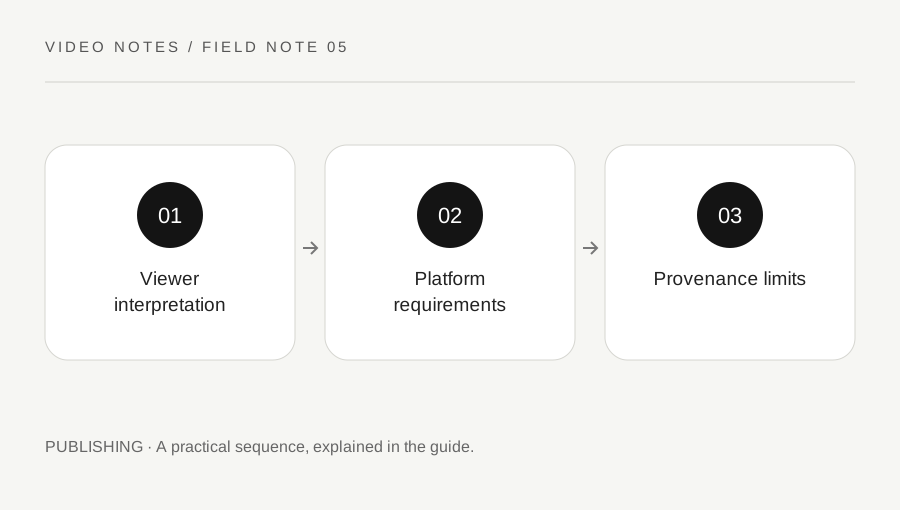
Original explanatory diagram. Examples illustrate a method or decision; they are not claims of personal testing.
Identify the synthetic contribution
List which parts were generated or meaningfully altered: footage, a face, a voice, a setting or another element. Separate that from ordinary editing assistance. A fully fictional animation and a photorealistic scene of a real place can create different viewer expectations. Do not base the disclosure decision only on how many seconds were generated.
For an illustrative travel explainer, a generated shot of an identifiable location may look like footage captured there. That distinction matters even if the narration is factually correct. Write down what an ordinary viewer could infer about the source. This makes the publication decision more concrete than a generic statement that AI helped with the project.
Read the current destination’s rules
Check the official platform guidance at publication time. YouTube currently requires disclosure for realistic generated or meaningfully altered content in specified circumstances and provides an AI-use setting during upload. Its examples distinguish realistic synthetic events from some minor edits and production assistance. The wording and interface can change, so use the live help page.
Do not copy a remembered menu label from an old tutorial and assume the task is complete. Review the final video against the platform examples, including audio where relevant. Other destinations may have different requirements. If the same edit is distributed to several places, keep a small destination checklist rather than assuming one upload decision covers them all.
Write context that answers the real question
Use clear wording when viewers need to understand the role of the image: illustrative generated scene, fictional reconstruction or another accurate description. Match the label to what happened. Do not call a fabricated event archival footage, and do not imply that a generated spokesperson gave a real interview.
Place necessary context where viewers can encounter it with the scene, not only in an obscure project note. Platform controls and your own explanatory text serve related but different purposes. A label should not be used to excuse an otherwise misleading presentation. Review the picture, narration, title and description together to see whether the complete impression remains accurate.
Understand what Content Credentials can show
C2PA describes Content Credentials as provenance information whose integrity and association with an asset can be checked. Its explainer states that credentials do not make a judgement that the content itself is true. A valid record can describe a synthetic or staged scene; an absent record does not automatically prove deception.
Use supported tools to inspect available information and preserve it through your workflow where appropriate. Do not remove provenance merely to make generated material look camera-captured. Also avoid promising that every editor, export or platform will preserve every record. Test the actual delivered file and destination behaviour if provenance is a project requirement.
Keep a publication decision record
Store the final export, the disclosure decision, relevant source records and the platform guidance checked. Note the date because policies evolve. If a collaborator uploads the video, give them a concise checklist showing which controls and context are required. Do not assume a finished file communicates every publishing obligation on its own.
After upload, review the visible result and correct missing context through the supported route. If the video is later reused in a new setting, reassess the interpretation and requirements. A provenance record and an AI label are useful parts of a transparent publication process, but factual accuracy, permissions and other platform rules still need their own review.
A practical checklist
Choices are saved in this browser. Reset them here or clear this site’s browser storage.
Questions that come up
Do Content Credentials prove a scene happened?
No. They concern provenance and integrity information, not a judgement that the depicted event is true.
Does every AI-assisted edit need the same label?
No. Follow the current destination’s rules and assess the actual contribution and viewer impression.
Does disclosure guarantee monetisation?
No. Disclosure is one part of platform compliance and does not establish eligibility or approval of the whole video.
References & scope
Background references checked on 18 October 2026. Worked examples and diagrams are original teaching material.