Keep Generated B-roll From Looking Like Evidence of a Real Event
Illustrative footage can help explain an idea, but a realistic generated scene may be mistaken for a record. Decide what each shot claims through its placement, narration and labels before using synthetic B-roll in a factual video.
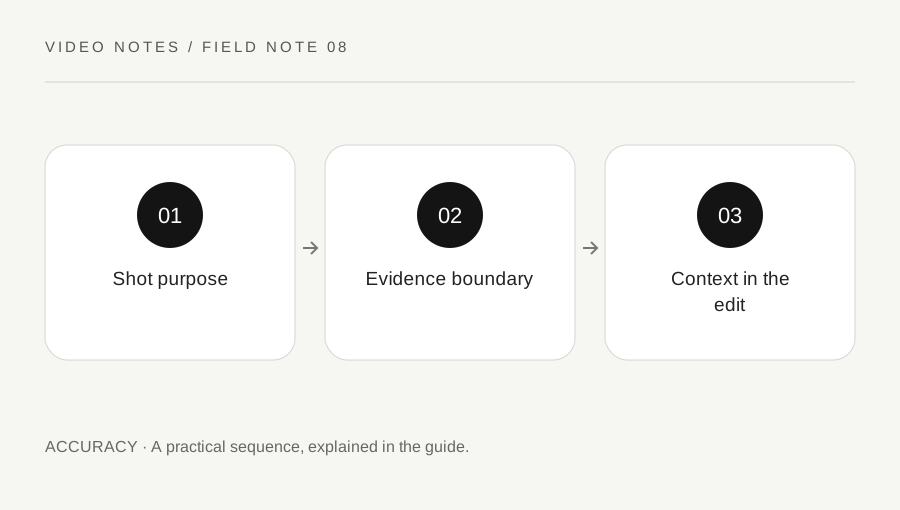
Original explanatory diagram. Examples illustrate a method or decision; they are not claims of personal testing.
Write the purpose of each illustrative shot
For every candidate shot, finish the sentence this image helps the viewer understand. A decorative transition, a hypothetical example and evidence of a real event are different roles. Generated footage may suit the first two with appropriate context, but it should not be presented as a camera record of an event that did not occur.
For an illustrative explainer about urban heat, an abstract model of shaded and unshaded surfaces may serve the explanation. A photorealistic street with a real place name and a fabricated emergency could imply something much more specific. Choose the visual role before generating rather than trying to explain away the result after the edit is complete.
Separate factual statements from visual atmosphere
Make a source list for the factual claims in the narration. A generated image does not support a statistic, establish a location or verify a process. Keep the evidence in authoritative source material and use the visual only for the role you have defined. Check maps, diagrams and labels with the same care as spoken claims.
If you need a real event record, seek appropriately licensed genuine footage or another verifiable source. Do not prompt for a realistic substitute and then call it archival. A scene can appear plausible while containing invented buildings, uniforms or actions. Plausibility is a visual property, not a source citation.
Review the edit for unintended associations
Place the shot beside its narration and surrounding clips, then ask what the sequence implies. A generated hospital corridor shown during a report about a named hospital can appear to depict that institution even without an on-screen name. A cut from a real person to a synthetic action can imply their involvement.
Use an illustrative review example: if narration names a particular flood and the next image shows generated water around a recognisable landmark, a viewer may infer that the image records that flood. Change the visual, add immediate clear context or choose a diagram. Do not rely only on a general end credit that viewers may never reach.
Use appropriate disclosure and provenance
Read the destination’s current rules for realistic synthetic content. YouTube lists realistic scenes that did not occur and altered footage of real places among cases needing disclosure. Its upload control is part of the platform process, while your own editorial explanation may still be needed at the relevant moment.
Preserve available provenance where appropriate, but understand its limits. C2PA explains that a valid credential does not judge the truth of the depicted content. Likewise, the absence of metadata is not proof that footage is false. Keep the factual source and the generation record as separate pieces of information with different purposes.
Run a context review before publication
Watch the final export without the production notes and identify any shot that could be mistaken for evidence. Ask a suitable reviewer what they think the image depicts, without first telling them the intended interpretation. Treat a mistaken inference as useful feedback about the edit. Do not invent a formal audience test or claim broad validation from one informal review.
Record the accepted shot purpose, source status and required context for future reuse. A clip suitable in a clearly fictional scenario may become misleading in a news-style compilation. Reassess it when the surrounding narration or title changes. The goal is to make the relationship between explanation and evidence understandable at the moment the viewer sees the image.
A practical checklist
Choices are saved in this browser. Reset them here or clear this site’s browser storage.
Questions that come up
Can generated B-roll verify a factual claim?
No. Use appropriate source evidence for the claim and treat the generated visual as an illustration with a defined role.
Is a general AI credit enough?
It may not explain a specific misleading inference. Assess the scene context and the current destination requirements.
Can I reuse a cleared illustrative shot anywhere?
Reassess the new context. A different title or narration can make the same image imply a different event or fact.
References & scope
Background references checked on 18 October 2026. Worked examples and diagrams are original teaching material.