Review a Generated Product Clip for Visual Claims
A generated product shot can imply features even when no caption states them. Compare the visible object and action with approved product evidence before using the clip in marketing or a demonstration.
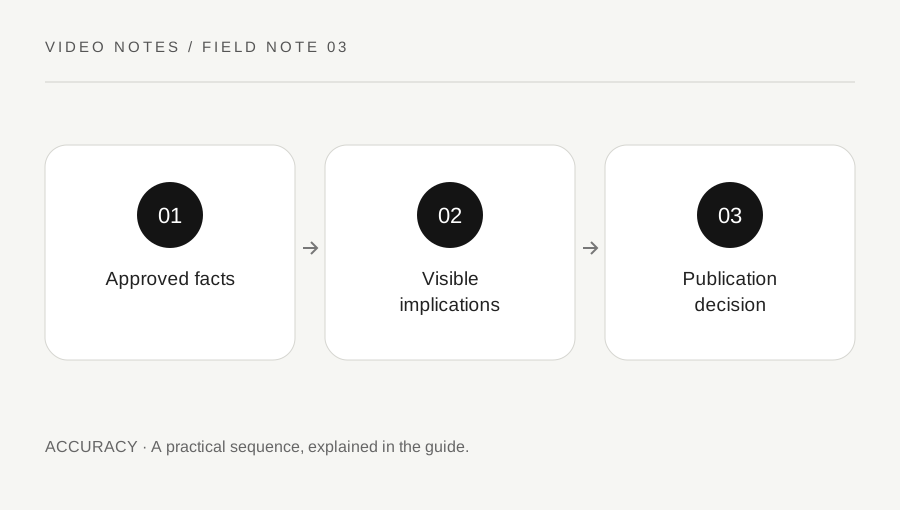
Original explanatory diagram. Examples illustrate a method or decision; they are not claims of personal testing.
List the facts the clip must preserve
Identify the exact product variant and approved reference material. Record the features that matter to the intended message: shape, ports, controls, scale, packaging or the way a part moves. Separate decorative atmosphere from factual demonstration. A visually appealing scene is not evidence that the product performs the action shown.
For an illustrative insulated bottle clip, a changed lid mechanism or an invented opening can misrepresent the product even if the colour looks right. Use genuine product photographs, specifications and authorised guidance as the comparison baseline. Do not ask the generation model to settle a factual question that the product team has not confirmed.
Inspect the object across time
Review the full clip for changing geometry, disappearing controls, shifting logos and inconsistent accessories. Check the action frame by frame where hands interact with the product. A clean opening frame does not establish that the object remains accurate throughout. Record the timestamp and exact mismatch rather than writing a vague note that it feels wrong.
Compare all important views with the approved variant. A generated camera turn can invent an unseen side or connection. If you cannot verify that view, do not present it as a faithful demonstration. Consider a static approved product image with conventional motion or a real recorded demonstration instead of spending repeated attempts on an unsupported view.
Ask what a viewer could reasonably infer
Look beyond literal captions. A product shown resisting water, carrying an extreme load or producing a dramatic result may imply a performance claim. The US FTC explains that advertising claims must be truthful and supported; other markets have their own applicable requirements. Obtain appropriate review for the actual campaign and jurisdiction.
Do not treat a generated result as a test. An illustrative scene can still mislead if its context suggests real performance. If a visual is only a concept, label and frame it clearly and decide whether that explanation is sufficient for the intended use. Necessary specialist or legal review should happen before publication, not after the clip has been widely distributed.
Keep branding and factual text controlled
Use approved logos and exact product wording as separate production assets where practical. Check that the generated background does not contain imitation labels, invented certifications or accidental competitor marks. A correct overlay does not repair a visibly wrong object underneath it. Review the complete impression of picture, text and narration together.
For an illustrative feature announcement, the approved copy may say that a control is adjustable while the image appears to show a different mechanism. Flag that disagreement and choose an accurate visual route. Do not hide the mismatch behind fast cuts simply because it is less likely to be noticed at normal speed.
Make an explicit acceptance or replacement decision
Create a short review record listing the clip version, checked features, unresolved issues and approval owner. Classify it as suitable for the specified use, suitable after defined changes or unsuitable. Avoid a broad approval that is later reused for a different claim or market without review.
If the clip fails an important factual check, replace the visual method rather than endlessly weakening the requirement. Real footage, an approved render or a clearly labelled abstract illustration may be more appropriate. Keep the final export and its approved context together. The aim is an accurate communication choice, not proof that generation can replace every product production task.
A practical checklist
Choices are saved in this browser. Reset them here or clear this site’s browser storage.
Questions that come up
Is a realistic generated clip a product test?
No. It is a generated visual. Performance claims need appropriate evidence independent of the generation.
Can a disclaimer fix every visual mismatch?
No. Assess the complete impression and applicable requirements with appropriate review. A misleading core image may need replacement.
Should I keep retrying until it looks close?
Not when important features remain unverifiable. Use a production method that can preserve the required facts.
References & scope
Background references checked on 18 October 2026. Worked examples and diagrams are original teaching material.